Photographing America: The Farm Security Administration


When we think about the Great Depression, the Dust Bowl, and the iconic images of rural America in the 1930s and early 1940s, we envision photographs made by the Farm Security Administration (1935–43). Known first as the Resettlement Administration, the Farm Security Administration was a federal project that sent photographers all over the country documenting America. Dorothea Lange’s “Migrant Mother,” Arthur Rothstein’s “Farmer and sons walking in the face of a dust storm”, Walker Evans’ storefronts, and Gordon Parks’ picture of an African American charwoman, “American Gothic” – his first professional photograph, taken in the FSA building – were all made for the Farm Security Administration (FSA).
The Farm Security Administration in Kentucky 1935–1943
Marion Post Wolcott, Ben Shahn, Russell Lee, John Vachon, Carl Mydans and Esther Bubley photographed in Kentucky for the FSA. Together, they made a unique visual record of Kentucky during this critical time in our nation’s history. All of their work is housed in the Library of Congress.


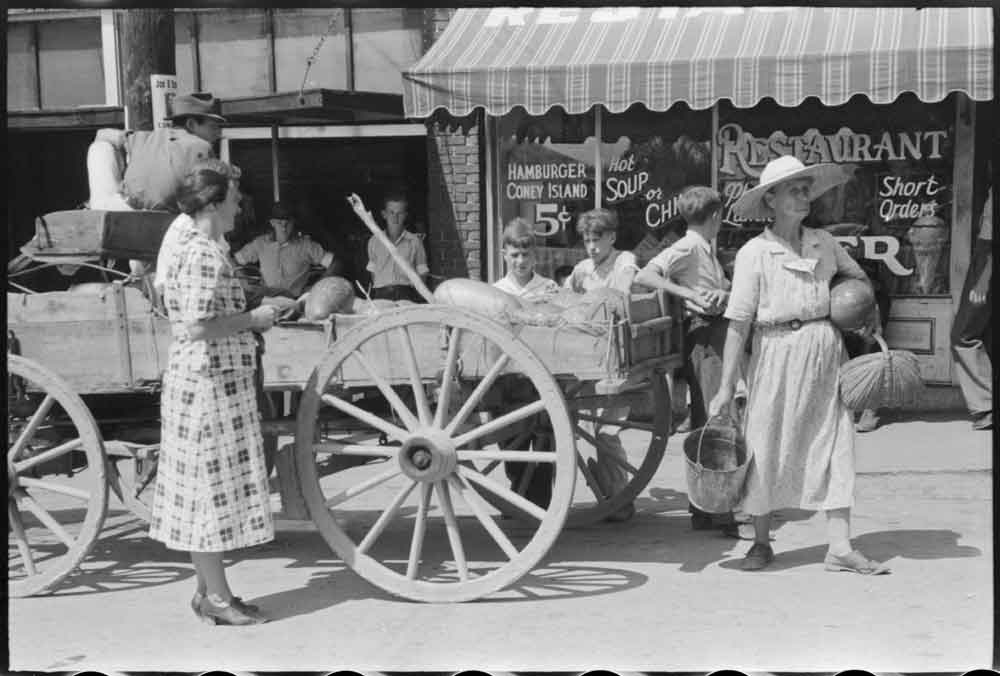


This is the work that inspired the next two iterations of the Project.
These great photographers inspired us to complete our first project in the mid ’70s. Read about the 1970s Project here. More recently, we decided to produce another iteration of the project and to hopefully inspire a future generation of photographers to produce yet another iteration in 40 years. Read about what we are doing now here.
There is much left to be done. Will you help?
The photographic phase of the current Kentucky Documentary Photographic Project has been completed. Documenting Kentucky: Three Photographic Surveys was exhibited at the Frazier History Museum in Louisville KY from April into November 2025. We plan to tour the exhibit.
We are currently working on a book connecting the three surveys to be published by the University Press of Kentucky, and are about to begin production a feature length film with Kertis Creative.
Once the book and film are completed, all work will be donated to the University of Louisville Photographic Archives, and we hope that the younger photographers will revive the Project in 2055.
Much has been done, and much is left to do. We ask your help in continuing our work in documenting Kentucky.